
Overview
The Center for the Study of Social Difference (CSSD) is an interdisciplinary research center supporting collaborative projects that address race, gender, sexuality, and other forms of inequality to foster ethical and progressive social change. It does so by supporting interdisciplinary faculty-led working groups, developing public programming, and producing public scholarship focused on social difference.
CSSD supports working groups, hosts events, and produces public scholarship on social difference.
Since its establishment, CSSD has supported working groups or thought communities that bring together faculty in the humanities and social sciences with faculty in the sciences, law, and medicine, and artists, activists, and policymakers in the United States and beyond. Working groups meet regularly to develop humanistic inquiry and social theorizing around matters of significance. The Center’s model of creating engaged working groups aims to connect academics and practitioners to make a difference in the world.
Our working groups result in the creation of new concepts, courses, publications, and events, and shape public discourse and policy. In the last ten years, the Center has hosted 19 multi-year projects and collaborated with over 16 Columbia schools and units on projects and content. Our work spans 8 world regions and over 28 countries.
In addition, CSSD organizes thematic public programming aimed at political education and is developing public scholarship initiatives to widen the reach of its working groups and its programs.
On the occasion of myriad anniversaries that offer occasions for taking stock, including the 250th anniversary of the United States’ Independence, CSSD has launched a new thematic focus on Renaissance for 2026-2027, that seeks to probe which aspects of the past require caretaking and reinvigoration, and which require abandonment in order to develop ways to move forward - to be reborn - in our present?
In 2025-2026, CSSD continues with its thematic focus on Crisis in recognition of the manifold crises we inhabit today. Out of this theme, we initiated an ongoing event series, Countering the Carceral State, to host discussions around the crises of disciplinary enforcement at home and abroad.
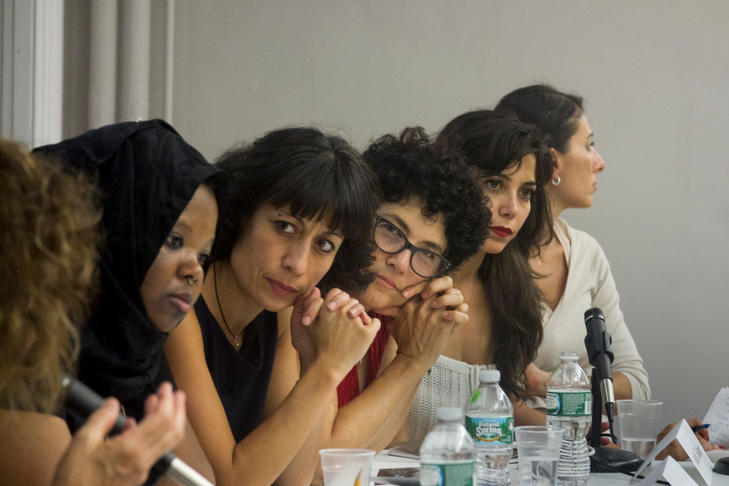
Why study social difference?
We live in a world where social differences - between women and men; cis and trans; rich and poor; global north and global south; between black, brown and white; and between people who are differently abled - have been made to matter. These differences undergird inequalities, locally and globally, and limit cultural horizons. How are social differences created and institutionalized? How has science grounded or undermined such differences? How do liberal democracies founded on principles of equality tolerate profound injustice?
The discrete categories by which we identify people (such as gender, sexuality, race and ethnicity) have proven inadequate to understanding the complexities of power in our world. It is urgent that we understand the mutually constituted categories of difference that shape our social world and their cultural and economic impacts.